
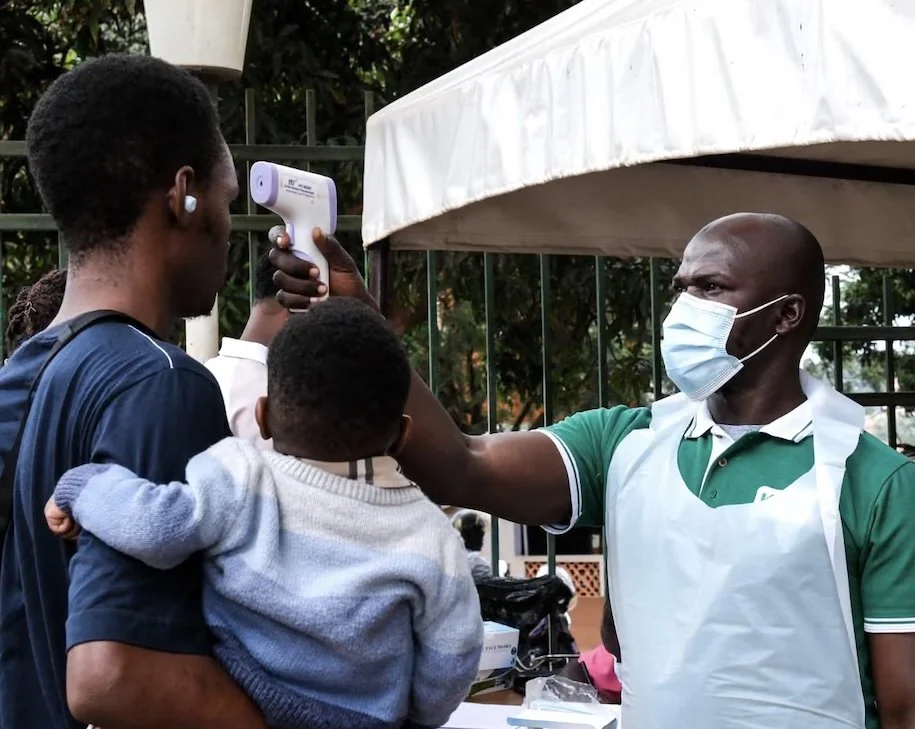
Photograph: Hajarah Nalwadda/AP
Public Health Voices: Essay by Irwin Redlener
Am I worried about the current Ebola outbreak? Yes. But this is not COVID-level panic. Ebola does not spread the way COVID spreads. It does, however, require an organized global response to contain transmission, protect health workers, and ensure that infected patients receive the best available care.
As of mid-May 2026, the World Health Organization has determined that Ebola disease caused by Bundibugyo virus in the Democratic Republic of the Congo and Uganda constitutes a “Public Health Emergency of International Concern”, though not a pandemic emergency. WHO reports that the outbreak began in Ituri Province in eastern DRC, and CDC reports imported confirmed cases in Uganda among travelers from Congo.
Ebola was first identified in 1976 in outbreaks in what are now South Sudan and the DRC. The largest Ebola epidemic occurred in West Africa from 2014 to 2016, with more than 28,600 reported cases and more than 11,000 deaths.
At the time of that 2014 outbreak, I was director of Columbia University’s National Center for Disaster Preparedness and was laser focused on how the United States and the world were working to contain the virus and care for those who were infected.
In the United States, public concern escalated after Thomas Eric Duncan, a traveler from Liberia, became the first person diagnosed with Ebola in this country after arriving in Dallas in September 2014. He first sought care at a Dallas emergency department on September 25, was discharged, returned by ambulance on September 28, was confirmed to have Ebola on September 30, and died on October 8, 2014. Two nurses who cared for him subsequently became infected and recovered.
